How Lenses Affect Your Shot
(Or Why Basketball Players Don’t Play in Running Shoes)
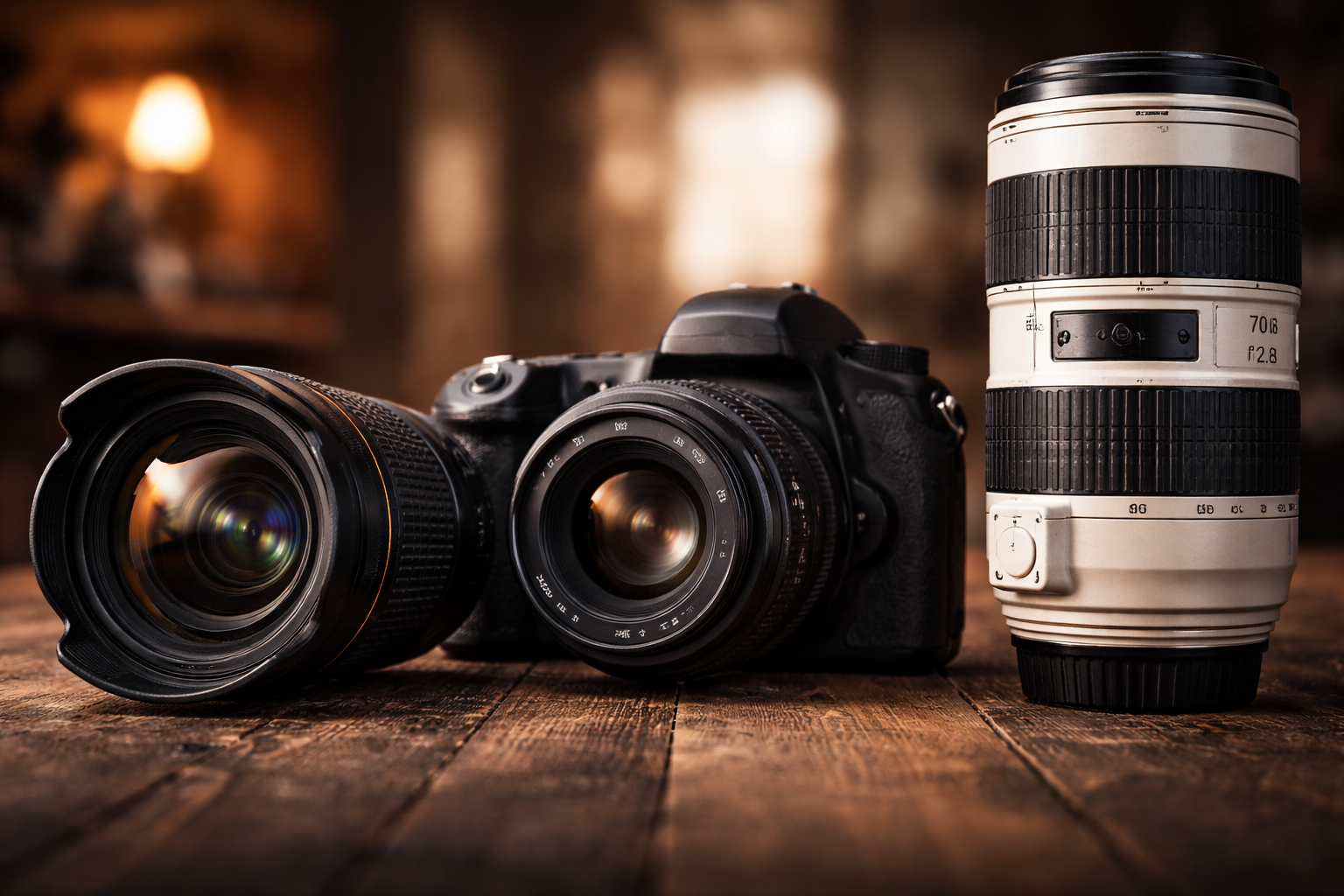
Camera with Lenses — Professional Photography Gear on a Clean Surface
You can take a photo with almost any lens, just like you can play basketball in running shoes.
But that does not mean it will feel right, look right, or work in your favor.
Lenses shape how a photo feels more than most people realize. They control distance, perspective, compression, and how natural a subject looks. The same way shoes affect balance, movement, and comfort for an athlete.
A basketball player can play in running shoes. They will still run, jump, and score. But they will slide more, feel less stable, and tire faster. Basketball shoes are built for quick stops, lateral movement, and control. Lenses work the same way.
A wide lens is like a lightweight training shoe. It gives you range and freedom of movement. I use a 16–35mm f/2.8 for restaurant photography and prints because it allows me to capture large tables, tight spaces, and the full atmosphere of a place. It makes spaces feel bigger and brings people into the scene. The tradeoff is that if you get too close, faces can start to look stretched, which is why distance and angle matter.
A standard lens is like a clean everyday sneaker. Balanced, comfortable, and natural. I use a 50mm for portraits because it closely matches how the human eye sees the world. It does not exaggerate or compress too much, which makes it ideal for portraits that feel honest and timeless.
A macro lens is like a precision shoe made for detail work. I use a 100mm macro for food and cocktail content because it allows me to get close, isolate details, and capture texture. Ice, foam, garnish, and plating all matter, and this lens makes small details feel intentional instead of accidental.
A telephoto lens is like a performance shoe built for control and distance. I use a 70–200mm for party and nightlife shots. It lets me stay back, capture candid moments, compress the background, and isolate energy without interrupting it. This is why party photos often feel cleaner and more cinematic with longer lenses.
None of these lenses are better than the others. They are tools designed for different movements and environments.
A good photographer is not someone who owns every lens. It is someone who knows which one fits the situation, the same way an athlete knows what shoes to wear for the game.
If a photo feels off, it is often not the camera or the subject.
It is the lens choice.